Yesterday morning, Gregory and I had a discussion (if you know can call it that) about the closet (if you know what that means,) selecting clothes (if you know the process,) getting dressed (if you are able,) and keeping the cats out of the closet (if you remember to do so,) etc.
The conversation lasted about 15 or 20 minutes (if one can measure time.) The whole time I knew I was using too many words and was not sure how much or what he understood. A brief summary of the event is:
Gregory: "I want to go back."
Michael: "You can't go back."
Gregory's morning sweats and slippers are laid out on the bench for him to use after cleaning up. I put them out the night before so they are waiting for him in the morning when he is ready. For a while he used to get them out of the drawer in the closet but I started doing it for him when most often he stood there naked, chilled, looking to me without words, saying "What do I do next?"
He struggled less this morning then he usually does with getting the sweatshirt on; correct arm in correct hole, shirt correctly oriented. Other times he stands there anyway wondering what to do next.
After his shirt was on, while I was sitting at my computer, he came over and went through the hemming and hawing and hesitating that begins our conversations. I stopped working, checked the expression on my face to make sure it looked pleasant, interested, and patient, and waited.
"I want to go back." That was the essence of what he wanted to say.
"I am not sure what you mean?" I asked. Eventually, because he was not able to tell me what he meant and because I could tell he was getting frustrated, I guessed, "Go back to picking your own clothes out of the closet?" The answer was "Yes."
I only wish you could have been here to see the confusion in him trying to express himself. Once I knew what he wanted, I also knew that we could not really discuss the issue because the associations and understandings do not exist. But I tried. I talked slowly and simply.
In as few words as possible, I talked about the problem with the cats chewing his shoe laces. I talked about his struggling with picking out clothes and then not knowing how to put them on. I talked about my not being able to go through this with him every morning. I talked about the "feel bad now or feel bad later" idea. I talked about the problem with Alzheimer's and how that has changed our life. I talked about not being able to go back. I talked to him about doing the best we can.
Eventually he, with great organizational difficulty, said, "You need ... to do ... what ... you must ... that is best for ... me." He cried and said, "I'm sorry."
I told him not to be sorry. At least not for me, that I am OK and I will do what I have to for him. "I am here for you. I will make good decisions for you."
But maybe we can go back a little bit, if we do it together. Instead of my picking out his clothes, I will go into the closet with him, my keeping the cats at bay, and my helping him decide what he wants to wear.
I'll make sure he has the pants, and the shirt, and the belt, and the sox, and the shoes. We will take everything out of the closet into the bedroom, put them on the bench and then I'll say, "Get dressed." The closet will be velcroed shut so he does not go back in looking for something already on the bench.
While I am sitting here at my computer, I'll make sure he keeps on his underwear while putting on his outerwear. I'll sit here and probably write again about my frustrations, fears, and anger. While he is getting dressed just in case he needs help, I'll surreptitiously monitor his behavior while I am typing.
The challenge of telling him (doesn't work,) showing him (doesn't work,) and doing it for him (which doesn't always work) will continue. Why do I have to be human when I want to be super-human and be the most patient person in the world?
Thursday, February 7, 2013


Monday, February 4, 2013
Conundrum
conundrum |kəˈnəndrəm|noun ( pl. conundrums )a confusing and difficult problem or question: one of the most difficult conundrums for the experts.• a question asked for amusement, typically one with a pun in its answer; a riddle.ORIGIN late 16th cent.: of unknown origin, but first recorded in a work by Thomas Nashe, as a term of abuse for a crank or pedant, later coming to denote a whim or fancy, also a pun. Current senses date from the late 17th cent.While I chose this title to refer to the conundrum I found myself in today, it also fits into what I would call "The Riddle of Alzheimer's."After struggling with helping Gregory to select his clothes every morning for what has been at several months, I came to the conclusion that I should take over the responsibility. Because Gregory has such difficulties with word and item associations, my verbal explanations (although simple) and prompts were not helping. Even taking him into the closet and pointing at an item didn't help.For example this morning he had on undershirt and underpants and was holding his belt, knowing something was wrong. I prompted, "You need pants." He went into the closet, opened his drawer and began taking out a second pair of underpants. "How many pair of underpants do you need?" (Poorly asked question, slap my hand.) So he put back the second pair and began taking off the first pair.By the time I just took a pair of pants off the hanger and handed them to him, he was totally uncertain what he had to do next. "Put these on." That worked. Next, while he knew he needed the belt next, he fumbled with figuring out how to get it on. I had to thread it through the loops for him. I stopped "interfering" to see if he could pick up from here but with sox in hand, he pointed to his feet and said, "Something needs to go here." "Yes, sox." So he got up, went into the closet and got a second pair of sox. Before he could try putting on both pair, I took one and put it back in the drawer. He was able to select his shoes and put them on, today, and successfully after the sox were on. "Would it just be easier if I selected your clothes for you in the morning?" I asked gently. "You have been struggling with this for a long time and when I try to help, it doesn't seem to work."He thought for a short while and replied, "Yes. I think it would make it easier for me." He said this in a docile, earnest way. No anger, no frustration, no resentment, no loss. Obviously it was not the answer I wanted (although I knew it was the right answer) because I still want him to try to work through things. But his answer was much better then one of confusion, anger, frustration.It was the right answer because by now it was more than obvious that we were in a "loose/loose" situation. My help wasn't helping. If my "taking over" made him feel bad, it fit into the "Feel bad now or feel bad later" category. By my taking over, I will not get frustrated or short with him. I will easily be able to avoid snide or negative or resentful remarks (which I try keep to myself anyway but with which I do not always succeed.)The conundrum is that if I decide to "take over" at least there will be a predictability and a follow through for me but with him not having to work through getting dressed, he will loose the skill completely. Feel bad now or feel bad later?I will begin making the bed right when we get up so I can lay his clothes out in the right order without a rumpled bed to confuse him. I have velcroed the closet doors closed so he will not be tempted to dress himself, or get another pair of pants even thought I have put a pair on the bed for him. (Keeping everyone out of the closet but myself will also help with the recent problem of our new kitties chewing up our shoelaces.)As in the past, down the road I will ask Gregory if he would like to try taking the job of selecting his clothes back again. Sometimes he does and is successful. Other times he does and is NOT successful. Sometimes he just relinquishes the job calmly saying, "No thank you."The riddle is that maybe this new procedure will work, maybe not. Maybe it will work today but not tomorrow or maybe tomorrow but not the next. Just laying out his clothes every morning does not insure that he will be able to dress himself, remember to put everything on, and in the correct order. But as in the past, I will be ready to move on to the next conundrum, the next riddle, the next solution, or not.riddle 1 |ˈridl|nouna question or statement intentionally phrased so as to require ingenuity in ascertaining its answer or meaning, typically presented as a game.• a person, event, or fact that is difficult to understand or explain: the riddle of her death.
ORIGIN Old English rǣdels, rǣdelse ‘opinion, conjecture, riddle’; related toDutch raadsel,German Rätsel, also to read.
ORIGIN Old English rǣdels, rǣdelse ‘opinion, conjecture, riddle’; related toDutch raadsel,German Rätsel, also to read.
Sunday, February 3, 2013
Meditation Class
If you read these blogs consistently, you will know that I took an eight week course in Yoga Nidra Meditation. It was quite beneficial for me and I thought it might be good to continue.
Corinne Peterson, my instructor, decided to have a small group continuation in her downtown Evanston office and I intend to take advantage of her offering.
She and I talked about including Gregory. This is an e-mail I wrote to her in response to her request for a little more information on what she might expect or what she might do differently when including Gregory in a session.
Visit Corinne's website at: (http://www.corinnepeterson.com
Corinne,
Corinne Peterson, my instructor, decided to have a small group continuation in her downtown Evanston office and I intend to take advantage of her offering.
She and I talked about including Gregory. This is an e-mail I wrote to her in response to her request for a little more information on what she might expect or what she might do differently when including Gregory in a session.
Visit Corinne's website at: (http://www.corinnepeterson.com
Corinne,
I think it would be a good idea to do a test run with just Gregory and me to see if it works for him. Lets set up one or two times and since it will only be the three of us, you can let me know how much you might charge.
Let me ramble a little...
I am not sure how much you need to do differently, although I'll discuss it below. He might get something out of the usual Yoga Nidra or he may need it to be simplified.
If he needs it simplified I imagine that it would not be good for the group situation (or for my needs either.) We can try to evaluate as we go along.
Perhaps we should do one or two sessions with just the three of us. One "simplified" experience and one "regular" experience and see if we can tell how he does?
Some ideas for the first time with Gregory, simplified version: he may need some extra support from me in following directions to prepare (i.e. getting comfortable etc) I would advise you to keep the meditation as simple as possible.
When giving directions, best to keep them simple and one at a time. So for example, instead of saying: Close your eyes and picture a forest where you are walking quietly along past a brook that is bubbling with fish swimming slowly back and forth; you might say: Close your eyes. (Pause 5 or 10 seconds) Picture a forest. (Pause) See the trees. (Pause) See the sun shining through the trees. (Pause) In other words, one image at a time with time to process?
If you are interested, maybe we could work together to develop for your practice, a Yoga Nidra that is specialized for people with Alzheimer's or other dementias. Perhaps it would just be guided imagery of calm, beautiful, spiritual experiences WITHOUT asking much processing. It would be Yoga Nidra only in that it would help the person get to that meditative state in a comfortable, peaceful, frustration free place.
For Gregory, language and communication barely exists while all the memories and abilities are still there. He just cannot access them easily or on demand (his or mine.) He cannot easily process or make associations.
Isn't living life in most ways the ability to make associations between ALL of our experiences past and present in a way that helps us decide our actions? This no longer works for him.
I have gone through some wonderful growth with Yoga Nidra including new understandings, awarenesses, changes in behavior and thinking, etc. For Gregory perhaps just the ability to help him have an hour of peaceful meditation would be a great goal.
If he is able to make those associations in a meditative state but not be able to do so in waking language or communication, that is good also.
What it boils down to is when you say, "Visualize a forest," I have no idea what may or may not go on in his mind today which might be different from the next time.
My blog, although there is a lot, might give you some insight on what I go through on a day to day basis being his support. http://mhorvichcares.blogspot
If you would like to talk more, let me know. Meanwhile when might we set up a just the three of us session?
Fondly,
Michael
Wednesday, January 30, 2013
A Reply to the Reply
B,
Hi. Thanks for the speedy reply. I am not really depressed or anxious so at least for now do not feel the need for drugs, although not opposed. I do get down time, have a wonderful therapist that I spend time with every week, and have many supportive friends in the area. I am sleeping well, Gregory is not wandering or violent or angry and knows me and our home and our family and friends (even though he might not be able to call them by name.) He is happy and contented and often tells me so.
Hi. Thanks for the speedy reply. I am not really depressed or anxious so at least for now do not feel the need for drugs, although not opposed. I do get down time, have a wonderful therapist that I spend time with every week, and have many supportive friends in the area. I am sleeping well, Gregory is not wandering or violent or angry and knows me and our home and our family and friends (even though he might not be able to call them by name.) He is happy and contented and often tells me so.
The problem is trying to keep some sense of normalcy around here when I never know how he will respond or what he will remember or how much he will understand. For example, I can lay out his clothes, no problem, but then he gets more out of the closet, doesn't know how to put them on, or forgets some combination of them. Even when he comes to me for help, short of sitting him down "old people's home style" and dressing him, he cannot follow simple directions, or pointing, or demonstrating. So helping is NO help. That is really what frustrates me.
Also, I am learning to follow that he does not always mean what he says, like when I ask "Are your pockets filled?" (wallet, keys, etc) and he says NO but they are. Or I'll tell him to go to the bathroom right before we are leaving and he will say OK but if I don't see him do it, chances are he doesn't and then as we are walking out the door he'll say, "Oh I need to go to the bathroom."
Honestly don't know what I would do with a companion here 6 days a week. Maybe if we had a larger place, they could be getting dressed while I was in my office or whatever. But it is an intimate condo. When the companions are here I will make a play date with friends, or go shopping, or just be somewhere by myself and work on my poetry at the local Starbucks, or go out to lunch, or go on an adventure. I have a massage once or twice a month. A few times when the weather was still nice, G and the companion would go out and I would stay home by myself which was nice.
It is the day to day that seems to make me nuts. Like asking him to fill the water pitcher before dinner and sometimes he can do it and other times he cannot. If I try to help, that only complicates and confuses him further so I just hold back and let him struggle, which is very difficult for me and him. I often tell him, "It is a question of feel bad now or feel bad later."
Instead of accepting it gracefully and calmly I find anger and "hate" in my heart and I know it shows in my voice and gestures. Sometimes he will say something which uses the best words he can get out but it will be insulting or demeaning. I still react to the words used instead of the hidden intent. Even though I am becomming more and more aware of the fact that he can use any words is a blessing and I don't always reinterpret or translate them into a positive, understanding statement before my emotions kick in and I get angry with him and have hurt feelings.
In summary, what is really getting to me is that in the day to day functioning of our (my) live, NOTHING IS WHAT IT SEEMS!
P.S. I am using these correspondences on my blog because I feel they are valuable to my readers. Names are changed to protect the innocent:-)
Fondly,
Michael
P.P.S.S. We are going to Battle Creed to visit G's family this weekend. I'll send them your love.
Reply From My Friend
Dearest Michael,
I use that term of endearment as a former caregiver to a current caregiver. I just read your blog "Between a rock and a hard place"
The rawness of your emotions makes me feel for you so much. I must tell you I "coped" with L's behaviors with the help of antidepressants and Xanax f or anxiety, Also, after I had a stroke in 2010 you may remember he went to a nursing home. There I could still see him and most importantly touch him. Many days I stayed 6-7 hrs but I had a break when I went home.
Before the nursing home, I had a companion here 6 days a week. (We were fortunate to have Long Term Car Insurance which covered that) I guess what I'm trying to say is: Are you getting enough downtime.? Are you getting any therapy- talk or Rx's?
What happened to me when L died was that I felt so relieved for him that he was no longer so frustrated, but also for me even tho I really missed touching him. It took me months to feel comfortable with groups of other people esp. When there was much jocularity. I was beginning to come out of the fog when I found some old love/sexy letters which just got me way down again.
Now I'm volunteering in two places and in two book clubs and I'm doing pretty well. I would love to talk with you whenever you want. Let me know what times are good for you and I'll see when we can connect.
Much love and big hugs,
B
PS My son calls almost every day which helps a lot!
An E-mail to a Friend
Dear B,
Laughs are good. Glad you enjoyed the article I sent.
In response to "How are you doing?" I am hanging in there but currently by the fingernails. G continues to fail, doesn't understand most words, so communication is difficult, so most parts of life don't work smoothly if at all. Yet so many things still do work well. It is a crap shoot and Russian Roulette at the same time as well as an opera and a circus and a freak show.
Laughs are good. Glad you enjoyed the article I sent.
In response to "How are you doing?" I am hanging in there but currently by the fingernails. G continues to fail, doesn't understand most words, so communication is difficult, so most parts of life don't work smoothly if at all. Yet so many things still do work well. It is a crap shoot and Russian Roulette at the same time as well as an opera and a circus and a freak show.
For the most part I am fine but the small explosions add up, the regrouping takes it toll, and the resilience has its cost. Sometimes I feel that I am not too "nice" to him. My tone of voice is not loving, I am impatient, I am short. I don't know when to help or how to help. I hate letting him struggle by himself but sometimes I think that is the best choice. I keep thinking I'll get the hang of it, but suspect that there is no hang! I'll keep trying.
Someday I would like to talk about what it was like towards the end with your husband, if you are up to it. I so understand how you felt towards the end of his Alzheimer's and how much you must miss him. Just to hear him say, "I love you."
While I find myself wishing Gregory dead so he does not have to face the inevitable (is that too strong a statement?) I know I'll be devastated.
For details on how we are doing check out http://mhorvichcares.blogspot.com
m
Compassion
Taken from www.dailyom.com
| January 29, 2013 In The Presence of Difficulty Compassionby Madisyn Taylor Compassion is the ability to see the deep connectedness between ourselves and others. Moreover, true compassion recognizes that all the boundaries we perceive between ourselves and others are an illusion. When we first begin to practice compassion, this very deep level of understanding may elude us, but we can have faith that if we start where we are, we will eventually feel our way toward it. We move closer to it every time we see past our own self-concern to accommodate concern for others. And, as with any skill, our compassion grows most in the presence of difficulty. We practice small acts of compassion every day, when our loved ones are short-tempered or another driver cuts us off in traffic. We extend our forgiveness by trying to understand their point of view; we know how it is to feel stressed out or irritable. The practice of compassion becomes more difficult when we find ourselves unable to understand the actions of the person who offends us. These are the situations that ask us to look more deeply into ourselves, into parts of our psyches that we may want to deny, parts that we have repressed because society has labeled them bad or wrong. For example, acts of violence are often well beyond anything we ourselves have perpetuated, so when we are on the receiving end of such acts, we are often at a loss. This is where the real potential for growth begins, because we are called to shine a light inside ourselves and take responsibility for what we have disowned. It is at this juncture that we have the opportunity to transform from with-in. This can seem like a very tall order, but when life presents us with circumstances that require our compassion, no matter how difficult, we can trust that we are ready. We can call upon all the light we have cultivated so far, allowing it to lead the way into the darkest parts of our own hearts, connecting us to the hearts of others in the understanding that is true compassion. |
Saturday, January 26, 2013
Reality Check
Hey, I woke up this morning. I can see. I can hear. I can smell. I can taste. I can touch. I can get up early and make coffee. Before JRC I can drive to McDonalds so we can have a fast breakfast of Egg McMuffins. I can drive to JRC, a Jewish Temple in Evanston to attend Sabbath services and to witness our friend Jan's first ever reading of the Torah as part of those services.

I can take a nap with both kitties joining me: one purring in my groin, the other draped across my neck and face. (P.S. The kitties are in favor again. Perhaps my niece Colleen's support helped me to look at them with new eyes.)

I can talk on the phone with a close friend John about life, love, Alz, God, religion, Judaism vs Catholicism, opera, kitties, art, creativity, and more.
I can look forward to some kind of dinner and then a movie on NETFLIX. I can look forward to a good night's sleep and to an empty day tomorrow, waiting to be filled - both the day and me.
So if my last few posts have given you impression that I am "in trouble," you were correct. But if you know me well enough, you also know that I recover pretty easily and pretty quickly. My psychic said, "You are resiliant!" She didn't know how right on she was ... or did she?
This was one of today's prayers at JRC. Fitting! A huge list of temple members who are ill was read.


I can take a nap with both kitties joining me: one purring in my groin, the other draped across my neck and face. (P.S. The kitties are in favor again. Perhaps my niece Colleen's support helped me to look at them with new eyes.)

I can talk on the phone with a close friend John about life, love, Alz, God, religion, Judaism vs Catholicism, opera, kitties, art, creativity, and more.
I can look forward to some kind of dinner and then a movie on NETFLIX. I can look forward to a good night's sleep and to an empty day tomorrow, waiting to be filled - both the day and me.
So if my last few posts have given you impression that I am "in trouble," you were correct. But if you know me well enough, you also know that I recover pretty easily and pretty quickly. My psychic said, "You are resiliant!" She didn't know how right on she was ... or did she?
This was one of today's prayers at JRC. Fitting! A huge list of temple members who are ill was read.

Next, the Kaddish was said for a HUGE list of JRC members or family who have passed away.
Puts a proper perspective on life and the living, doesn't it? P.S. Sometimes "complete healing of body and soul" might mean not in this life as we know it. But none the less healing and peace.
Friday, January 25, 2013
Further Adventures in the Life
For several years, Gregory has had a book, really a perpetual calendar, of photographs of architecture of the world. Each day he would turn the page to reveal a new famous building from around the world. Often he would call me over to enjoy the photograph with him.
Many of the buildings he knows or we have visited. Considering that his language skills continue to disappear (almost all gone?) it has always been an easy way to "share" an experience by "looking" without the need for "talking."
Just in case you are uncertain about what a perpetual calendar is, imagine a 365 page book, with each page having the name of the month and number of the day but no day names and no years. So you can look at the building for January 25th no matter what the day of the week or the year.
For Christmas I found another book by the same publisher only with famous paintings. I thought this would be a great addition to his library and to his daily routine, especially because he continues to loose skills and therefore has fewer things to do.
Turns out that the arrival of the second book coincided with the beginning of his being unable to remember the routine for using a perpetual calendar. Even when reminded of the day's number, "Today is 25," he has been unable to follow through with finding the page that has January 25 on it.
Every morning he calls me into the living room to go through the steps. Every morning he does not remember what we talked about the day before.
I cannot, first thing in the morning, sleep still in my eyes and on my mind, teach him how to do something that he will never learn how to do. I cannot explain to him what I am feeling without hurting his feelings and I cannot continue to explain the explanation every morning.
So at the risk of making him "feel less" but with the benefit of helping me not be angry or frustrated every morning, I told him, "Every night before we go to bed, I will take over turning the pages so the books will be ready for you in the morning."
He was OK with that (at least on the surface but who knows what he really feels below the surface as he is unable to explain or describe his feelings.)
I wish that I could make these transitions (which I really don't mind making) more smoothly and not after anger, frustration, and unkind words to Gregory. I work at bringing my emoitonal reactions and my intellectual understanding closer but FUCK, I am so tired ... and lonely ... and sad.
Many of the buildings he knows or we have visited. Considering that his language skills continue to disappear (almost all gone?) it has always been an easy way to "share" an experience by "looking" without the need for "talking."
Just in case you are uncertain about what a perpetual calendar is, imagine a 365 page book, with each page having the name of the month and number of the day but no day names and no years. So you can look at the building for January 25th no matter what the day of the week or the year.
For Christmas I found another book by the same publisher only with famous paintings. I thought this would be a great addition to his library and to his daily routine, especially because he continues to loose skills and therefore has fewer things to do.
Turns out that the arrival of the second book coincided with the beginning of his being unable to remember the routine for using a perpetual calendar. Even when reminded of the day's number, "Today is 25," he has been unable to follow through with finding the page that has January 25 on it.
Every morning he calls me into the living room to go through the steps. Every morning he does not remember what we talked about the day before.
I cannot, first thing in the morning, sleep still in my eyes and on my mind, teach him how to do something that he will never learn how to do. I cannot explain to him what I am feeling without hurting his feelings and I cannot continue to explain the explanation every morning.
So at the risk of making him "feel less" but with the benefit of helping me not be angry or frustrated every morning, I told him, "Every night before we go to bed, I will take over turning the pages so the books will be ready for you in the morning."
He was OK with that (at least on the surface but who knows what he really feels below the surface as he is unable to explain or describe his feelings.)
I wish that I could make these transitions (which I really don't mind making) more smoothly and not after anger, frustration, and unkind words to Gregory. I work at bringing my emoitonal reactions and my intellectual understanding closer but FUCK, I am so tired ... and lonely ... and sad.
More on Cats
They get up on the kitchen counter.
They steal things by carrying them off.
They howl plaintively as if someone was killing them.
They play roughly.
They run around the condo.
They play under rugs.
They play with couch pillows.
They scratch the leather furniture.
They leave their fur on furniture.
They leave their fur on clothes.
They track litter on the floor.
They leave litter smell.
They claw.
They bite.
They chew up things.
They eat shoe laces.
They destroy things.
They are expensive to maintain.
They disrupt your sleep.
They break things.
They ignore you at times.
They stain your bedspread.
They love.
Is it worth it? I am trying to decide. SO many emotions. They do give back but I am having to weigh the pros and cons and so far you can tell who is winning.
Gregory is not able to help with any of their needs let alone any discipline or training, if such a thing is really possible with these two.
I would (will) feel really badly having to take them back to the shelter but I cannot let guilt rule my decision. Also, it is MY decision which is another down of Alzheimer's, no one to talk to, no one with whom to decide.
They steal things by carrying them off.
They howl plaintively as if someone was killing them.
They play roughly.
They run around the condo.
They play under rugs.
They play with couch pillows.
They scratch the leather furniture.
They leave their fur on furniture.
They leave their fur on clothes.
They track litter on the floor.
They leave litter smell.
They claw.
They bite.
They chew up things.
They eat shoe laces.
They destroy things.
They are expensive to maintain.
They disrupt your sleep.
They break things.
They ignore you at times.
They stain your bedspread.
They love.
Is it worth it? I am trying to decide. SO many emotions. They do give back but I am having to weigh the pros and cons and so far you can tell who is winning.
Gregory is not able to help with any of their needs let alone any discipline or training, if such a thing is really possible with these two.
I would (will) feel really badly having to take them back to the shelter but I cannot let guilt rule my decision. Also, it is MY decision which is another down of Alzheimer's, no one to talk to, no one with whom to decide.
Thursday, January 24, 2013
Ah, This Explains It!
Perhaps this horoscope for today explains the previous two posts. See I told you I would feel better tomorrow!
| January 24, 2013 Slow Balance Aries Daily HoroscopeYou may have trouble controlling yourself today as your thoughts and feelings are likely swirling around your mind in an erratic fashion. As a result, making decisions can seem more difficult than usual, and you may find yourself avoiding situations in which you may be called upon to offer an opinion. A busy schedule is likely the culprit behind your inability to center your thinking patterns and emotional state. Today can be a good time to retreat from your outer-world responsibilities by taking a personal day or leaving work early—you can distance yourself from the cacophony of modern life and reconnect with the person you are inside when you are alone. An imbalanced mood is often a sign that we are overdoing it and need to stop pushing ourselves so hard in our private and outer-world arenas. While we may feel compelled to look toward our achievements or relationships for validation, doing this establishes within us a need to labor every more diligently. We eventually reach a point, however, where we are so caught up in our efforts that we no longer know what to think or feel. Recovery is a simple matter of scaling back our pace and giving ourselves the gift of regular periods of tranquility. Immersed in an atmosphere of serenity and stillness, our own emotions, opinions, and values reemerge, allowing us to discover once again who we are and where we belong. Your vacillating mood will stabilize today as you allow yourself to step away from your frenzied labors. Horoscope from http://www.dailyom.com |
The Cats
The cats:
I buy their food.
I feed them.
I keep their water bowls filled.
I wash their bowls.
I clean up their litter.
I keep an eye on them.
I discipline them.
I pick up after them.
I take them to the vet.
I clip their nails.
I wash them periodically.
I brush them.
As of today,
I do not get much joy out of them.
Now and then they let me pick them up.
Now and then they purr.
Now and then they make me laugh.
Not enough return for the buck.
Not enough joy for the maintainance.
As of today,
I might get rid of them.
The cats.
You see, in my life there is only me,
But it is all about him.
And now it is all about him and them.
What about me? I?
I am sure I will feel better tomorrow.
Or not.
(Sorry CM and MM and GM.)
I buy their food.
I feed them.
I keep their water bowls filled.
I wash their bowls.
I clean up their litter.
I keep an eye on them.
I discipline them.
I pick up after them.
I take them to the vet.
I clip their nails.
I wash them periodically.
I brush them.
As of today,
I do not get much joy out of them.
Now and then they let me pick them up.
Now and then they purr.
Now and then they make me laugh.
Not enough return for the buck.
Not enough joy for the maintainance.
As of today,
I might get rid of them.
The cats.
You see, in my life there is only me,
But it is all about him.
And now it is all about him and them.
What about me? I?
I am sure I will feel better tomorrow.
Or not.
(Sorry CM and MM and GM.)
Not Tonight
Tonight I cannot see the Truth
Not through my fog
Not through my tears
Not through his confusion.
Not through my fog
Not through my tears
Not through his confusion.
Sunday, January 20, 2013
Daily Affirmations
You may have seen these quotes from Abraham-Hicks before on my blog. Our nephew Mark Jr turned me on to them and for the most part I find them helpful in my day to day dealing with living with my life-partner who is living with Alzheimer's Disease. Sometimes they are hard to "translate" to our situation but it is always interesting to try, especially with the help of our niece Colleen. This one provides an interesting perspective. If you want to check out Abraham-Hicks, click here.

http://www.abraham-hicks.com/lawofattractionsource/index.php
Saturday, January 19, 2013
Dear Abby,
 Pauline Phillips, the woman you probably all know as Dear Abby and who wrote under the name Abigail Van Buren, was never afraid to bring tough topics into public discussion. Alzheimer’s disease was no exception.
In 1980, long before her own diagnosis with this devastating disease, she brought dementia into the spotlight when she published a letter from a woman who had recently learned her 60-year-old husband had Alzheimer’s.
The woman, who signed her letter “Desperate in New York,” wanted guidance on how to cope. She felt isolated and helpless. She needed information.
Dear Abby’s reply began, “You are not alone.”
And she wasn’t. At the time, it was felt that Alzheimer’s disease was a major epidemic in the United States. Today, it is estimated to afflict more than 5 million people.
Dear Abby directed her to the Alzheimer’s Association, a newly formed group that came together to assist people with the disease and their families, raise awareness, advocate for state and federal help, and increase government funding for research in hopes of finding treatments and a cure. My personal involvement with the Association resulted from the fact that my father, three of his brothers and two of his sisters died from Alzheimer’s disease. In addition, in 2012 one of my cousins died from this disease.
At the time Dear Abby wrote to ‘Desperate in New York,” I was president of the New York Chapter as well as secretary/treasurer of the National Alzheimer’s Association. The national headquarters were run out of my law office in New York City, and my staff and I were fielding calls for information and referrals.
Within two weeks of the Dear Abby column being published, we were inundated with more than 22,000 pieces of mail requesting information. Dear Abby put Alzheimer’s disease in the public spotlight and put the Alzheimer’s Association on the map.
In the years to come, Mrs. Phillips continued to raise Alzheimer’s awareness, publishing numerous Dear Abby columns that connected those needing support to Association resources. Then, 15 years after first bringing the topic to readers across the globe, Mrs. Phillips – a woman known for her strong intellect and straight-talk – began showing signs of the disease.
Yesterday, after living with Alzheimer’s for more than a decade, she passed away at the age of 94.
Mrs. Phillips once wrote: “The purpose of life is to amount to something and have it make some difference that you lived at all.”
When Alzheimer’s disease finally becomes a distant memory, when a cure is discovered, Mrs. Phillips will be right on top of the list of people who humankind will owe it’s gratitude for ridding the world of this terrible disease.
The difference she made is profound. By encouraging people to talk and providing information when it was needed, she changed lives. She let those living with Alzheimer’s know they aren’t alone. By spreading awareness of Alzheimer’s disease, she helped enable the Alzheimer’s Association to get public funds to help and support families, educate caregivers, and increase the research budget from about 2 million in 1980 to more than 450 million today.
I wish to express my personal condolences to the family and appreciation to Mrs. Phillips for everything she has done to eliminate Alzheimer’s disease. May she rest in peace.
Lonnie Wollin
About the Blog Author: Lonnie Wollin is an attorney in New York and one of the founders of the Alzheimer’s Association. He remains actively involved with the organization.
When is Helping Not Helpful?
I still help too much. It is my nature to help. It is my nature to nurture. When confronted by a situation in which someone needs help, I will walk in and do my best to help. I will be sensitive, respectful, and take context as well as gestural cues to moderate and if necessary remove my helpfulness.
For example, walking down the street, woman in front stumbles and falls, purse empties. I will go into immediate action to make sure she is OK while at the same time making sure the content of her purse do not go too far astray. I will offer my handkerchief if her nose is bleeding or her hand got scrapped.
I will not only give physical comfort but also try to make sure she is not too embarrassed. After all accidents are accidental but we still seem to get embarrassed at our behavior. Sometimes people do not want help in situations like this and one must respect that. So after inquiring, I back off.
If someone looks like they are having a hard time, perhaps while sitting on a park bench, I will inquire about their needing help. Shall I sit with you? Shall I call someone? Can I help you home?
When we lived on Roscoe, Mary lived in one of the apartments. She was in her 80's, indigent, as close to being a homeless person as one can get while still having a home. She lived with her adult daughter who was developmentally disabled and prone to alcoholism and violence.
I would always say hi to Mary, who spent a lot of time sitting on the front stoop. Sometimes we would sit and talk. Once she had just returned from a neighborhood church that had free lunch and bingo on Wednesdays. She had won a flowered cup saucer as a prize and offered it to me. I thanked her but figured she could use it more than I, I now wish I had taken it as a memento, maybe that would have made her feel good.
One day, when I was leaving for work, I spotted Mary sitting on the stairs of the back porch. She looked very pale if not white. I sat down next to her and we were silent together for a while. "Are you OK."
"Yes, just a little tired."
"Are you sure. Can I help you?"
"No. Thanks. I'll be OK after I sit here a while." I left for work.
Mary died later that day. At least I was able to offer some comfort, if not unspoken love.
Even in very difficult situations, I am able to be strong and helpful. Once while living in New York City, my upstairs neighbor fell down the stairs from her second floor landing. She ended up on my landing with her face caught between the open door and the wall. I heard the crash and went running.
When I saw what had happened I called to Robert, my then lover, bring a blanket! I know you are not supposed to move a person but I did after assessing that she would possibly choke on her blood in this upside down, wounded position. I talked calmly all the time, inquiring about her pain, making sure my moving her wasn't complicating something like a broken neck, wrapped her in a blanket and held her in my arms murmuring comforting sounds while Robert called an ambulance.
We saw her off in the ambulance and waited for an hour until her husband got home (a little drunk on payday) and took him to the hospital. Afterwards I went into a little shock myself, but was OK in a short while. t is my nature to help. It is my nature to nurture. When confronted by a situation in which someone needs help, I will walk in and do my best to help. Interestingly enough, from that day on, the neighbor woman never spoke to me. If she saw me coming she would cross the street. Too embarrassed? Indebted? Never will know.
So all this "about me" and how good I am, is not to brag but brings me to my current topic. I help Gregory too much. If only I could wait and not rush in to help him, to lessen his frustration, to ameliorate his pain. For example, this morning he was getting dressed, I was at my computer, and he comes out of the closet carrying two shirts. One of them is mine. Often he forgets which side of the closet is his.
So I gently say, pointing, "That shirt is mine," trying to anticipate his actions.
To which he replies, "I know."
"Then why are you carrying it?"
"It was just there."
I might mention that he has problems getting dressed. Often he doesn't know the names of underpants or undershirt let alone which is the front. Once in a while he will forget he has one or the other on already and ends up wearing two or three undershirts or underpants.
When he comes out of the closet nude, not sure of what to do, I say, "You need to put on your underpants and an undershirt." Often I just say, "Underpants!" More often, I get up and point in the drawer where they are stored.
Even when I lay out his clothes, he doesn't always see them, or gets fixated on one or the other, or is thinking, "I need a shirt" so he goes back into the closet looking for a shirt, with the one I laid out still sitting on the bed, and can't find a shirt while looking through the area where the pants are hung.
So when I see him going off in these erroneous directions, I jump in with a suggestion for the correct action or behavior. This often serves to confuse him and then with his lack of active and/or passive language, i.e. speaking and/or understanding, we are not able to solve or explain the situation. Intermittently, my advanced comments do help, which serves to frustrate me more.
I get frustrated, he gets more confused. I get angry, he goes quiet. Sometimes, if I am tired, I get rude and very infrequently I "rage." My teacher self feels the failure. I want to disappear and my guilt sets in. One thing in my favor is that I am able to apologize pretty quickly.
So I berate myself with, "When am I going to learn. Why do I always jump in too soon. Why can't I just wait until he does wrong and then help. No babies are dying here so why not just chill and wait it out?" But I am helpful. That is my nature. Maybe next time I will be able to hold back and follow my new self instructions. I'll let you know if I get there!
Post Script (Disclaimer: Sometimes my assistance has to be very basic.)
In the middle of proof reading this post, Gregory was sitting on the "pot" making pain type noises. I asked, "Are you OK?"
He replied, "No. I think you might need to poke my butt." This is his way of saying that either his hemorrhoids are acting up or his anus area is irritated and sore because he is not always methodical in cleaning himself after a bowel movement. I check it out and if necessary begin a regime of putting cream on the affected area. I don't mind doing these personal things but try not to worry too much about the day when he becomes incontinent.
On checking this time, he had totally forgotten to wipe. So I cleaned him up and put on the cream. Then I had him sit on the toilet and asked him to kick off his shoes. He knew how to do it (this time.) Then I had to help him take off his jeans because he got confused. I also took off his underpants and showed him the mess, saying, "Looks like to forgot to wipe altogether." ME: Neutral, non-judgemental voice, he didn't feel too bad. HIM: "I can't imagine."
While I was away getting a clean pair of underpants, he decided to wipe. But he was wiping a clean ass on which I had applied healing cream, so I had to do it again. Because he already had on his sox, he didn't know how to put on a fresh pair of underpants. The order was wrong. I assisted. He was able to get his jeans and shoes back on. He thanked me, apologized for my having to do that. I assured him, "No problem. Happy to help"
So you see, sometimes it is obvious when and how to help. Other times it is not. Do you blame me (even though I blame myself) for getting confused, frustrated, angry, guilty, etc.
For example, walking down the street, woman in front stumbles and falls, purse empties. I will go into immediate action to make sure she is OK while at the same time making sure the content of her purse do not go too far astray. I will offer my handkerchief if her nose is bleeding or her hand got scrapped.
I will not only give physical comfort but also try to make sure she is not too embarrassed. After all accidents are accidental but we still seem to get embarrassed at our behavior. Sometimes people do not want help in situations like this and one must respect that. So after inquiring, I back off.
If someone looks like they are having a hard time, perhaps while sitting on a park bench, I will inquire about their needing help. Shall I sit with you? Shall I call someone? Can I help you home?
When we lived on Roscoe, Mary lived in one of the apartments. She was in her 80's, indigent, as close to being a homeless person as one can get while still having a home. She lived with her adult daughter who was developmentally disabled and prone to alcoholism and violence.
I would always say hi to Mary, who spent a lot of time sitting on the front stoop. Sometimes we would sit and talk. Once she had just returned from a neighborhood church that had free lunch and bingo on Wednesdays. She had won a flowered cup saucer as a prize and offered it to me. I thanked her but figured she could use it more than I, I now wish I had taken it as a memento, maybe that would have made her feel good.
One day, when I was leaving for work, I spotted Mary sitting on the stairs of the back porch. She looked very pale if not white. I sat down next to her and we were silent together for a while. "Are you OK."
"Yes, just a little tired."
"Are you sure. Can I help you?"
"No. Thanks. I'll be OK after I sit here a while." I left for work.
Mary died later that day. At least I was able to offer some comfort, if not unspoken love.
Even in very difficult situations, I am able to be strong and helpful. Once while living in New York City, my upstairs neighbor fell down the stairs from her second floor landing. She ended up on my landing with her face caught between the open door and the wall. I heard the crash and went running.
When I saw what had happened I called to Robert, my then lover, bring a blanket! I know you are not supposed to move a person but I did after assessing that she would possibly choke on her blood in this upside down, wounded position. I talked calmly all the time, inquiring about her pain, making sure my moving her wasn't complicating something like a broken neck, wrapped her in a blanket and held her in my arms murmuring comforting sounds while Robert called an ambulance.
We saw her off in the ambulance and waited for an hour until her husband got home (a little drunk on payday) and took him to the hospital. Afterwards I went into a little shock myself, but was OK in a short while. t is my nature to help. It is my nature to nurture. When confronted by a situation in which someone needs help, I will walk in and do my best to help. Interestingly enough, from that day on, the neighbor woman never spoke to me. If she saw me coming she would cross the street. Too embarrassed? Indebted? Never will know.
So all this "about me" and how good I am, is not to brag but brings me to my current topic. I help Gregory too much. If only I could wait and not rush in to help him, to lessen his frustration, to ameliorate his pain. For example, this morning he was getting dressed, I was at my computer, and he comes out of the closet carrying two shirts. One of them is mine. Often he forgets which side of the closet is his.
So I gently say, pointing, "That shirt is mine," trying to anticipate his actions.
To which he replies, "I know."
"Then why are you carrying it?"
"It was just there."
I might mention that he has problems getting dressed. Often he doesn't know the names of underpants or undershirt let alone which is the front. Once in a while he will forget he has one or the other on already and ends up wearing two or three undershirts or underpants.
When he comes out of the closet nude, not sure of what to do, I say, "You need to put on your underpants and an undershirt." Often I just say, "Underpants!" More often, I get up and point in the drawer where they are stored.
Even when I lay out his clothes, he doesn't always see them, or gets fixated on one or the other, or is thinking, "I need a shirt" so he goes back into the closet looking for a shirt, with the one I laid out still sitting on the bed, and can't find a shirt while looking through the area where the pants are hung.
So when I see him going off in these erroneous directions, I jump in with a suggestion for the correct action or behavior. This often serves to confuse him and then with his lack of active and/or passive language, i.e. speaking and/or understanding, we are not able to solve or explain the situation. Intermittently, my advanced comments do help, which serves to frustrate me more.
I get frustrated, he gets more confused. I get angry, he goes quiet. Sometimes, if I am tired, I get rude and very infrequently I "rage." My teacher self feels the failure. I want to disappear and my guilt sets in. One thing in my favor is that I am able to apologize pretty quickly.
So I berate myself with, "When am I going to learn. Why do I always jump in too soon. Why can't I just wait until he does wrong and then help. No babies are dying here so why not just chill and wait it out?" But I am helpful. That is my nature. Maybe next time I will be able to hold back and follow my new self instructions. I'll let you know if I get there!
Post Script (Disclaimer: Sometimes my assistance has to be very basic.)
In the middle of proof reading this post, Gregory was sitting on the "pot" making pain type noises. I asked, "Are you OK?"
He replied, "No. I think you might need to poke my butt." This is his way of saying that either his hemorrhoids are acting up or his anus area is irritated and sore because he is not always methodical in cleaning himself after a bowel movement. I check it out and if necessary begin a regime of putting cream on the affected area. I don't mind doing these personal things but try not to worry too much about the day when he becomes incontinent.
On checking this time, he had totally forgotten to wipe. So I cleaned him up and put on the cream. Then I had him sit on the toilet and asked him to kick off his shoes. He knew how to do it (this time.) Then I had to help him take off his jeans because he got confused. I also took off his underpants and showed him the mess, saying, "Looks like to forgot to wipe altogether." ME: Neutral, non-judgemental voice, he didn't feel too bad. HIM: "I can't imagine."
While I was away getting a clean pair of underpants, he decided to wipe. But he was wiping a clean ass on which I had applied healing cream, so I had to do it again. Because he already had on his sox, he didn't know how to put on a fresh pair of underpants. The order was wrong. I assisted. He was able to get his jeans and shoes back on. He thanked me, apologized for my having to do that. I assured him, "No problem. Happy to help"
So you see, sometimes it is obvious when and how to help. Other times it is not. Do you blame me (even though I blame myself) for getting confused, frustrated, angry, guilty, etc.
Thursday, January 17, 2013
It's in the Drawer
Over Gregory's journey with Alzheimer's, I have developed many techniques to help keep him organized. Then I have re-developed them and re-developed them and re-developed them. Here is the latest.
We have a "Pockets Table" in our hall by the front door. We each have a drawer for wallet, keys, cell phone, etc. The center drawer is where the emergency radio, flashlights, and charging station is kept. A wire runs from there to the other two drawers so you can "plug in."
In the past I had jewelry dividers in Gregory's drawer and a sign tent on the table to remind him of what he needed to put into his pockets. The sign has changed over time as the seasons changed and as his capabilities changed.
Today I tossed the sign because he isn't able to use it anymore. Forgets to look at it? Can't read it? Can read it but can't understand it? Can't apply looking at a word and associating it with the object? Doesn't matter, I tossed it.
Also realized that his wallet is black, his cell phone is black, his "Safe Return" necklace is black and the dividers in his drawer were black. Sometimes he would leave things behind probably because black became black and stayed black.
I changed the drawer a few days ago as pictured. Has been working well so far. Each item goes in its own container and with the white backing it is easy to tell what is what. The mints, cough drops, and sun glasses work well also. Here is a photo of his drawer.


We have a "Pockets Table" in our hall by the front door. We each have a drawer for wallet, keys, cell phone, etc. The center drawer is where the emergency radio, flashlights, and charging station is kept. A wire runs from there to the other two drawers so you can "plug in."
In the past I had jewelry dividers in Gregory's drawer and a sign tent on the table to remind him of what he needed to put into his pockets. The sign has changed over time as the seasons changed and as his capabilities changed.
Today I tossed the sign because he isn't able to use it anymore. Forgets to look at it? Can't read it? Can read it but can't understand it? Can't apply looking at a word and associating it with the object? Doesn't matter, I tossed it.
Also realized that his wallet is black, his cell phone is black, his "Safe Return" necklace is black and the dividers in his drawer were black. Sometimes he would leave things behind probably because black became black and stayed black.
I changed the drawer a few days ago as pictured. Has been working well so far. Each item goes in its own container and with the white backing it is easy to tell what is what. The mints, cough drops, and sun glasses work well also. Here is a photo of his drawer.

Just as an ironic comparison, here is a photo of my drawer:

Cell phone took photo, handkerchief, "Caregiver Necklace," charging wire, rings, keys, wallet, mints, bluetooth ear but, more mints, even more mints, yet even more mints, sun glasses clip, miscellaneous bits and pieces, two more ear bud sets, tape measure, cough drops, chapstick and misc.
A fast question: Who is closer to Nirvana? Drawer A or Drawer B?
Wednesday, January 16, 2013
Is an Alzheimer’s vaccine on the way?
New research suggests we may be one step closer to treating -- and preventing -- the degenerative brain disease
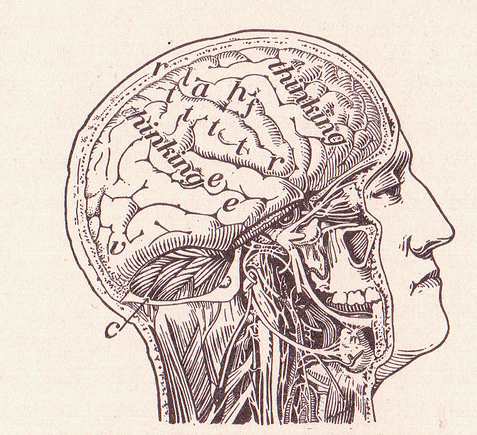
A team of researchers from Université Laval, CHU de Québec and pharmaceutical firm GlaxoSmithKline (GSK) has discovered a way to stimulate the brain’s natural defense mechanisms in people with Alzheimer’s disease, opening the door to the development of a treatment for the degenerative brain illness — and a vaccine to prevent it.
As reported by Science Daily:
One of the main characteristics of Alzheimer’s disease is the production in the brain of a toxic molecule known as amyloid beta. Microglial cells, the nervous system’s defenders, are unable to eliminate this substance, which forms deposits called senile plaques.The team led by Dr. Serge Rivest, professor at Université Laval’s Faculty of Medicine and researcher at the CHU de Québec research center, identified a molecule that stimulates the activity of the brain’s immune cells. The molecule, known as MPL (monophosphoryl lipid A), has been used extensively as a vaccine adjuvant by GSK for many years, and its safety is well established.
Over a twelve-week period, researchers gave mice with Alzheimer’s symptoms weekly injections of MPL. The results were dramatic, eliminating up to 80% of senile plaques and significantly improving cognitive function. The mice were also able to learn new tasks over the same period.
As it stands, researchers see two possible uses for MPL. It could be used in injections to slow the progression of the illness for people with Alzheimer’s disease – or it could be incorporated into a vaccine.
Today
Today I feel:
sad
frightened
lonely
angry
empty
unhappy
tired
frustrated
overwhelmed
Then I ran a very hot tub, turned off the lights, and meditated. I realized that it could be (and will be) worse, but for now OK. I realized that nothing MAJOR or DANGEROUS or INCURABLE or UNREPAIRABLE is happening or changing. I realized that the SUM TOTAL of it, almost ten years now, is what gets to me, PIECE by PIECE and at times PEACE by PEACE.
So now I am dried off and dressed. Writing. Feeling better. Thank you for asking!
sad
frightened
lonely
angry
empty
unhappy
tired
frustrated
overwhelmed
Then I ran a very hot tub, turned off the lights, and meditated. I realized that it could be (and will be) worse, but for now OK. I realized that nothing MAJOR or DANGEROUS or INCURABLE or UNREPAIRABLE is happening or changing. I realized that the SUM TOTAL of it, almost ten years now, is what gets to me, PIECE by PIECE and at times PEACE by PEACE.
So now I am dried off and dressed. Writing. Feeling better. Thank you for asking!
Monday, January 14, 2013
Jan's BLOG
Making a life from the fragments and the shards

What is art? How does one create significance and address sacred issues, life issues with words? How can art cross from the specific and the personal to the larger and more universal spaces of meaning? How can personal pain transform itself into universal consciousness and connection? How does community hold art’s preciousness? How does one stitch one’s heart back together again?
Saturday night my friend Michael Horvich read some of his poetry (for about a half an hour) between the musical sets of Peter Demuth at a cafe run by at-risk youth. There were about 40 of us in the audience. Michael’s poetry essentially deals with his experience of coping with his partner’s (of over 35 years) early onset of Altzheimers first diagnosed when he was 55. His poems are poignant, raw, real, especially because Michael’s delivery was so solid, vulnerable, and riveting. The poems came alive. Time stopped. These magical transformations certainly did not alter reality, but made truth and love and caring, visceral and honest. We were witnesses.
Perhaps it was because I have known Michael and Gregory for so long, perhaps it was because watching someone open their heart so publicly and freely, perhaps it was because the strength and love expressed were so palpable, that I couldn’t move my eyes, my ears, my very marrow from a deep, sincere, and fixed focus.
Some Flip Alzheimer’s Observations – 2012
Shoes and sox have turned into wondering “In
what order are these?”
what order are these?”
The belt and the belt loops no longer recognize
each other.
each other.
Reading glasses when worn make the room look
blurry.
blurry.
Reading glasses when not worn do not help with
reading.
reading.
Sleep clothes left in the bathroom are not in the
drawer at bedtime.
drawer at bedtime.
Underpants and undershirts no longer have
names or identities.
names or identities.
For that matter underpants and undershirts no
longer have fronts or backs.
longer have fronts or backs.
Sometimes pointing helps, sometimes the
response is non-directional.
response is non-directional.
Button-up shirts are pulled over and pull-over
shirts have too many holes.
shirts have too many holes.
A hanger’s only purpose is confusion.
Taking something out of a pocket from the
inside of one’s pants does not work.
inside of one’s pants does not work.
Knives and forks do not work as easily as
fingers.
fingers.
Putting ice into a glass at dinnertime consists of
too many steps.
too many steps.
“No” often means “Yes.” So what does “Yes”
mean?
mean?
The “yes” is the tenacious commitment to and the trembling embrace of Michael’s life situation, standing stalwart and mostly resolute to make a life from the fragments and the shards.
Thursday, January 10, 2013
On this day...
January 10, 2013
Happy Birthday Mom (RIP March 27, 2010)

Happy Anniversary Gregory and Michael (36 years)

Crazy
This poem was shared with us by Corinne Peterson in my Yoga Nidra class at the Heartwood Center in Evanston.
http://www.corinnepeterson.com/yoga-therapy/
Wednesday, January 9, 2013
If You Listen
This poem was shared with us by Corinne Peterson in my Yoga Nidra class at the Heartwood Center in Evanston.
http://www.corinnepeterson.com/yoga-therapy/
Monday, January 7, 2013
Meditation: Class 8
The final class of this series got off to an ominous start. I have had a little cough tickle for the last three or four days but not a full flung anything. When I arrived at class I set up my "nest" with the bolsters, pillows, mats, etc and settled in for a long winter's "nap."
About ten minutes into the session, as Corinne was helping us settle in with her soothing voice, I had to cough. I suppressed and reached for a cough drop even though the room had quieted and people were beginning to enter the Yogi Nirdra "state." I suppressed again and realized I wan't going to make it. So I got up to leave the room and when I hit the hallway by the stairs, my cough exploded.
I proceeded down and around the corner and coughed, choked, hacked, all but vomited. Pretty huh? This behavior is not new so I was not worried but I hated to disturb the group and was feeling a little sad for myself at missing the last session.
A few minutes later, one of the group came to find me. She is a doctor and made my welfare part of her Yogi Nidra in making sure I was OK. I was moved by her action.
After a while my attack subsided and I went back upstairs and settled in just outside the classroom, laying on my back on the carpeted floor. I was surprised that I was able to get into a deep meditative state pretty quickly as I listened to Corinne talk about breathing, feeling the inhaled breath fill my entire body and the exhaled breath go out into the universe.
Then we arrived at the crux of this session, taking a deep look at our Heartfelt Desires (which we have looked at in various ways over the sessions.) This time we were to notice any emotions that were involved with our Heartfelt Desire. We shifted back and forth between the emotion and its opposite. Part of the purpose of this activity is to acknowledge that everything changes but that there is one essential thing that does not change and that is the Essential Self which is apart from Ego, being critical or judgmental of self, etc. I lovingly held both emotions in my arms and asked what they wanted me to know.
In my Heartfelt Desire, I once again looked towards my responsibilities as caregiver for Gregory. The emotions I alternated were Immense Sorrow and Great Joy.
The SORROW being our situation, the slow disintegration of Gregory, my loss of a friend and lover and life mate.
The JOY being what a good job I am doing of helping Gregory along his path, how happy and content he is, how good our life continues to be, and the many things I still enjoy doing with him as well as all of the creative life endeavors in which I continue to involve myself.
In relating to my Essential Self, I realized that both my SORROW and my JOY were the same ... LOVE! Love for Gregory and love for myself.
Next we looked for Beliefs that were supporting and Beliefs that were defeating the desires. Turns out my Critic is usually on full force telling me where I fall short of my goals, how I could be doing much better, what a failure I am.
At the same time my Essential Self is telling me that I am a wonderful, loving, creative caregiver, always doing my best even though I loose patience now and then and may not be as perfect as I would like.
As horrible as our situation is, the quality of our life and of my life is good. I continue to grow, to accomplish for myself and help keep Gregory's roller coaster of a life on the tracks.
I bring calm and love and order to both of us. There will ALWAYS be room for improvement and I am always seeking that. I am not as bad as my Critic would like me to believe.
Another awareness I have been working on is the ability to separate my Ego or Essential Nature from my Essential Self. I can almost FEEL who I am when my thoughts are quiet and I am not trying to label, identify, understand, interpret. Not totally sure what this means yet but wanted to mention it.
I am taking this class at the Heartwood Center in Evanston with Corinne Peterson.
http://www.corinnepeterson.com/yoga-therapy/
About ten minutes into the session, as Corinne was helping us settle in with her soothing voice, I had to cough. I suppressed and reached for a cough drop even though the room had quieted and people were beginning to enter the Yogi Nirdra "state." I suppressed again and realized I wan't going to make it. So I got up to leave the room and when I hit the hallway by the stairs, my cough exploded.
I proceeded down and around the corner and coughed, choked, hacked, all but vomited. Pretty huh? This behavior is not new so I was not worried but I hated to disturb the group and was feeling a little sad for myself at missing the last session.
A few minutes later, one of the group came to find me. She is a doctor and made my welfare part of her Yogi Nidra in making sure I was OK. I was moved by her action.
After a while my attack subsided and I went back upstairs and settled in just outside the classroom, laying on my back on the carpeted floor. I was surprised that I was able to get into a deep meditative state pretty quickly as I listened to Corinne talk about breathing, feeling the inhaled breath fill my entire body and the exhaled breath go out into the universe.
Then we arrived at the crux of this session, taking a deep look at our Heartfelt Desires (which we have looked at in various ways over the sessions.) This time we were to notice any emotions that were involved with our Heartfelt Desire. We shifted back and forth between the emotion and its opposite. Part of the purpose of this activity is to acknowledge that everything changes but that there is one essential thing that does not change and that is the Essential Self which is apart from Ego, being critical or judgmental of self, etc. I lovingly held both emotions in my arms and asked what they wanted me to know.
In my Heartfelt Desire, I once again looked towards my responsibilities as caregiver for Gregory. The emotions I alternated were Immense Sorrow and Great Joy.
The SORROW being our situation, the slow disintegration of Gregory, my loss of a friend and lover and life mate.
The JOY being what a good job I am doing of helping Gregory along his path, how happy and content he is, how good our life continues to be, and the many things I still enjoy doing with him as well as all of the creative life endeavors in which I continue to involve myself.
In relating to my Essential Self, I realized that both my SORROW and my JOY were the same ... LOVE! Love for Gregory and love for myself.
Next we looked for Beliefs that were supporting and Beliefs that were defeating the desires. Turns out my Critic is usually on full force telling me where I fall short of my goals, how I could be doing much better, what a failure I am.
At the same time my Essential Self is telling me that I am a wonderful, loving, creative caregiver, always doing my best even though I loose patience now and then and may not be as perfect as I would like.
As horrible as our situation is, the quality of our life and of my life is good. I continue to grow, to accomplish for myself and help keep Gregory's roller coaster of a life on the tracks.
I bring calm and love and order to both of us. There will ALWAYS be room for improvement and I am always seeking that. I am not as bad as my Critic would like me to believe.
Another awareness I have been working on is the ability to separate my Ego or Essential Nature from my Essential Self. I can almost FEEL who I am when my thoughts are quiet and I am not trying to label, identify, understand, interpret. Not totally sure what this means yet but wanted to mention it.
I am taking this class at the Heartwood Center in Evanston with Corinne Peterson.
http://www.corinnepeterson.com/yoga-therapy/
Saturday, January 5, 2013
One Art
One Art
By: Elizabeth Bishop
The art of losing isn't hard to master;
so many things seem filled with the intent
to be lost that their loss is no disaster,
Lose something every day. Accept the fluster
of lost door keys, the hour badly spent.
The art of losing isn't hard to master.
Then practice losing farther, losing faster:
places, and names, and where it was you meant
to travel. None of these will bring disaster.
I lost my mother's watch. And look! my last, or
next-to-last, of three loved houses went.
The art of losing isn't hard to master.
I lost two cities, lovely ones. And, vaster,
some realms I owned, two rivers, a continent.
I miss them, but it wasn't a disaster.
- Even losing you (the joking voice, a gesture
I love) I shan't have lied. It's evident
the art of losing's not too hard to master
though it may look like (Write it!) like a disaster.
so many things seem filled with the intent
to be lost that their loss is no disaster,
Lose something every day. Accept the fluster
of lost door keys, the hour badly spent.
The art of losing isn't hard to master.
Then practice losing farther, losing faster:
places, and names, and where it was you meant
to travel. None of these will bring disaster.
I lost my mother's watch. And look! my last, or
next-to-last, of three loved houses went.
The art of losing isn't hard to master.
I lost two cities, lovely ones. And, vaster,
some realms I owned, two rivers, a continent.
I miss them, but it wasn't a disaster.
- Even losing you (the joking voice, a gesture
I love) I shan't have lied. It's evident
the art of losing's not too hard to master
though it may look like (Write it!) like a disaster.
Shared by my friend Pat.
Friday, January 4, 2013
Rocks & Hard Places II

I meet the companion in the lobby where he tells me the TV controller was dropped into the sleeper sofa. They found it by opening the sofa but when closing it the cat's head was caught. He doesn't think the cat was hurt. And he really feels bad.
Without thinking I say, "That was really stupid." Picturing the cat's head after a meeting with the heavy sofa bed and its metal structures and slicing hinges. He apologizes and I am not real gracious with my, "What's done is done. We'll talk."
I get up to the condo and everything seems calm. Both cats are on the bed wrestling as usual. I pet them while checking for any cuts, lacerations, breaks, and/or bruises. Gregory knows nothing about the incident, even though he was there. He finally says, "Maybe a little something happened."
I take the grocery cart back to the lobby after telling Gregory, "You are hopeless." On the way to the elevator I chant, "I am not my emotions, I am not my emotions."
I call the companion who is now on the train and tell him the cats are fine. Not to worry. I remind him that I earlier in our relationship I had said, "You will know when I am angry, meanwhile you do not need to apologize for things."
Then I say, "Now you know how I sound when I am angry." He apologizes. "But it is over, all is forgiven. Sorry I was so rough on you. Don't worry. Be done. The cats are fine." I know he isn't as he apologizes again.
To try to be lighter I say, "Now besides being responsible for Gregory's life and safety you have two cats to look after." He apologizes again.
I get back to the condo and Gregory apologizes. I try to talk about my emotions ... but to no avail. I try to tell Gregory what I went through ... but to no avail. I try to explain how frustrating it is that he didn't even remember what had happened ... but to no avail.
I know that my best advice to myself is, "Say nothing. Explain nothing. Do nothing." But what am I supposed to do with MY emotions? My anger? My frustration? No one to talk to. No one to explain to. No one to witness.
Never sure how much Gregory understands of what I am saying. Gregory experiences my emotions but we are not able to process the event together nor explain them away. Never any closure.
Now I have two upset people (not counting myself) on my hands and am not able to do anything about it, or the sick feeling in my gut, or the one in my heart. Talk about a ROCK and a HARD PLACE.
The incident is over, everything turned out OK, and over time I put aside my unresolved feelings. There is another expression: Whether the rock hits the pitcher, or the pitcher hits the rock ... the pitcher suffers. Gregory, the companion, and I are the pitchers. Alzheimer's is the rock.


Thursday, January 3, 2013

Tuesday, January 1, 2013
On Living with Dementia
This was taken from an article written by Floyd Skloot who has also written a number of books on his life with Alzheimer's disease. (Thanks to Joan and Robert for sharing this article.)
Something I wrote 15 years ago about living with dementia became a credo for me:
Since I can't presume I'll remember anything, I must live fully in the present.
Since I can't presume I'll understand anything, I must experience my life without pressing to formulate ideas about it.
Since I can't escape my altered brain and the limits it has imposed, I must be at home with it.
And since I can't presume I'll master anthing I do, I must let go of mastery as a goal and seek harmony instead.
Something I wrote 15 years ago about living with dementia became a credo for me:
Since I can't presume I'll remember anything, I must live fully in the present.
Since I can't presume I'll understand anything, I must experience my life without pressing to formulate ideas about it.
Since I can't escape my altered brain and the limits it has imposed, I must be at home with it.
And since I can't presume I'll master anthing I do, I must let go of mastery as a goal and seek harmony instead.
Subscribe to:
Posts (Atom)